Edited by Kiva Bank
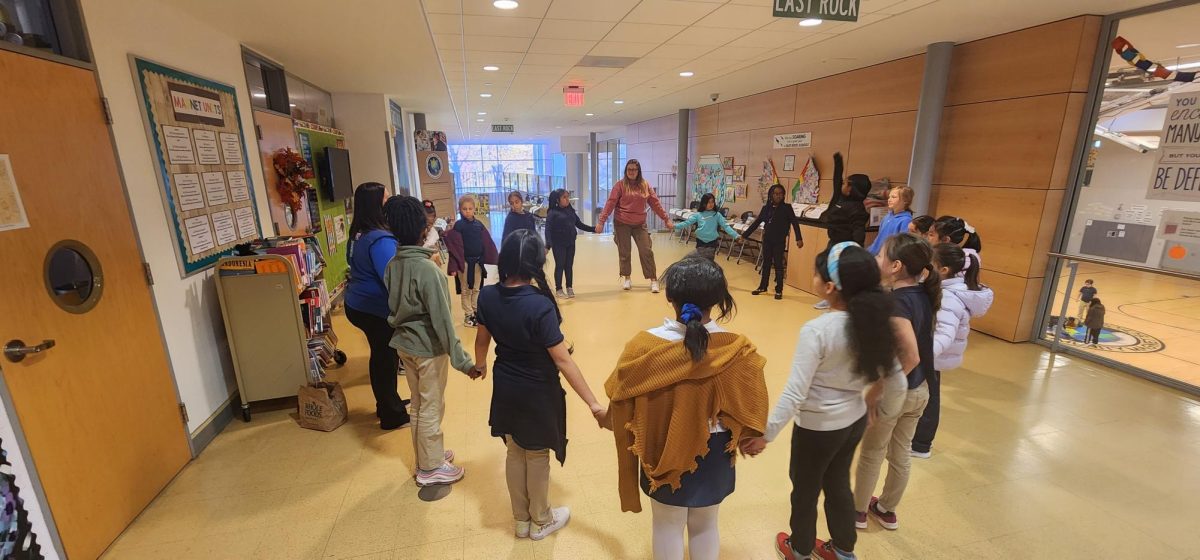
Over the summer, a student at Wilbur Cross High School was picked up and detained by ICE, which is shorthand for U.S. Immigration and Customs Enforcement. Like many around the city, students at East Rock Community & Cultural Studies Magnet School noticed.
Now, some are afraid that ICE agents could enter school property.
“I don’t think anyone should have to worry about ICE like students do,” said a 6th grader at East Rock School. Another student, Autumn Dixon, an eighth grader, expressed similar fears, describing ICE as a “brutal force of law enforcement.”
According to the East Rock Record Fall/Winter 2025 Survey, more than half of students (54 percent) are worried that ICE agents could come into the school. The survey also found that 81 percent of East Rock School students know what ICE is — and only half feel they are safe from ICE while at school.
Esdrás Zabaleta-Ramirez, a student at Wilbur Cross, was detained on July 21 while working at a car wash in Southington. He was 18. Mr. Zabaleta-Ramirez was released on September 2, after the judge granted him a $1,500 bond. Mr. Zabeleta-Ramirez’s lawyer did not respond to several interview requests from The East Rock Record.
As a result of this and other actions by ICE, students at East Rock are anxious about their own safety —and about their families’ safety as well.
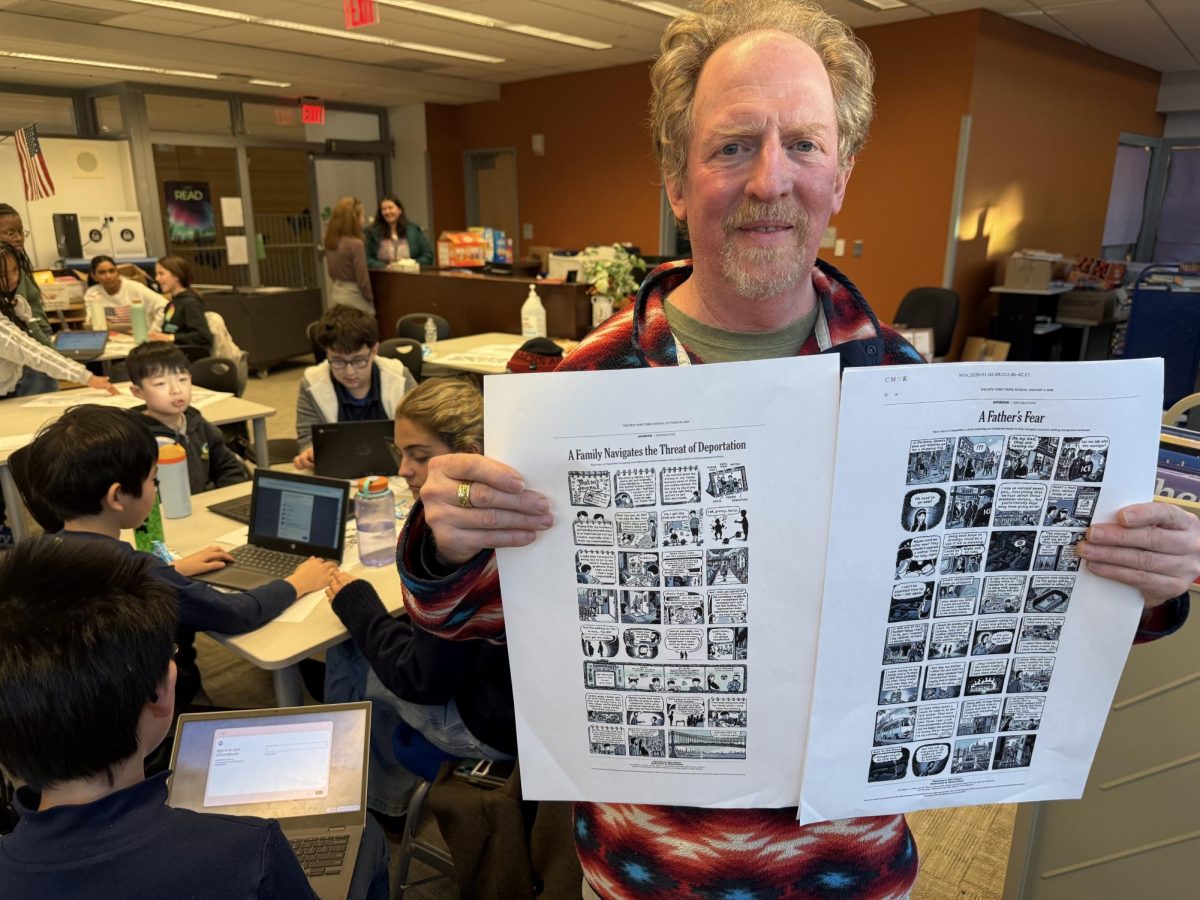
One student described being worried when her parents leave the house, as she wonders if they will ever come back home. The student said she was also less open to joking about topics like deportation because ICE arrests are occurring more frequently and closer to home.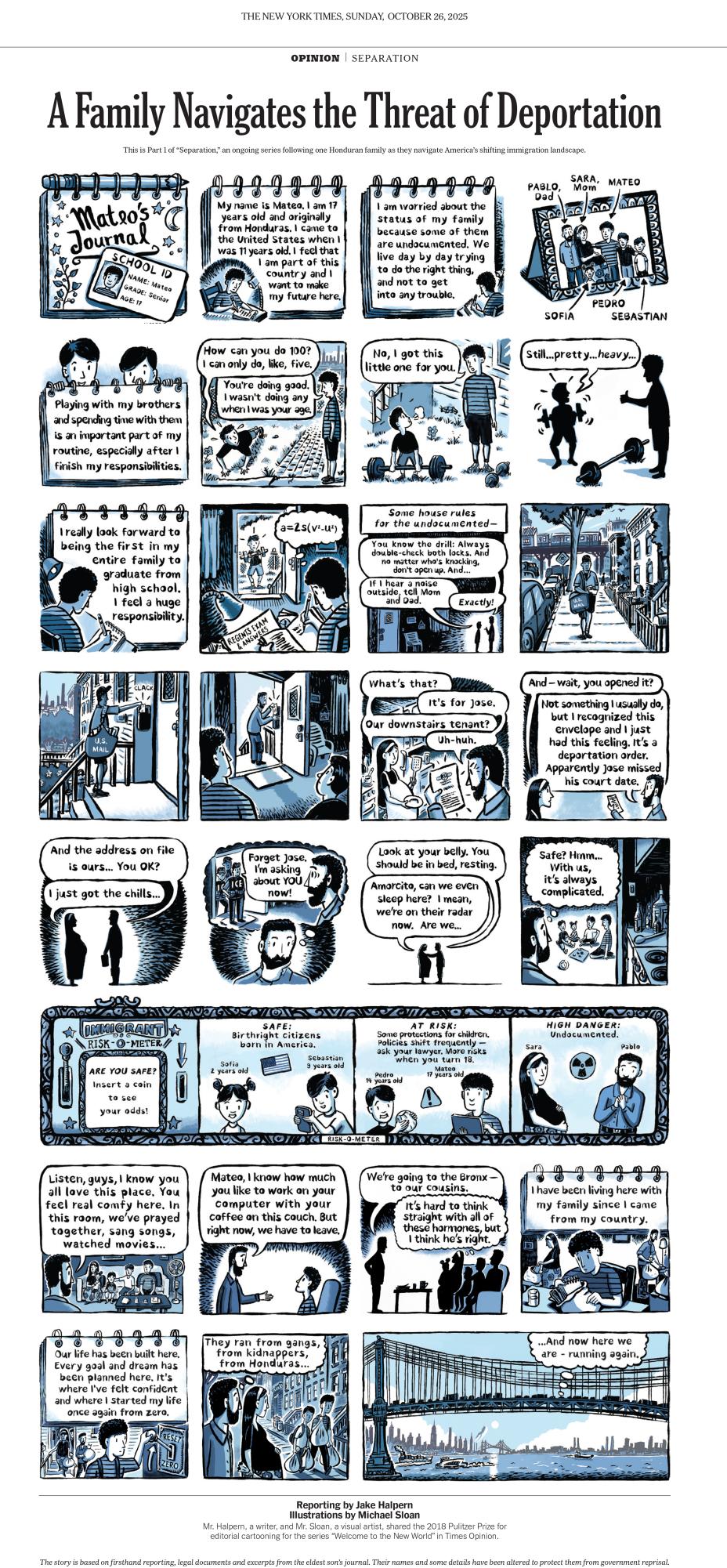
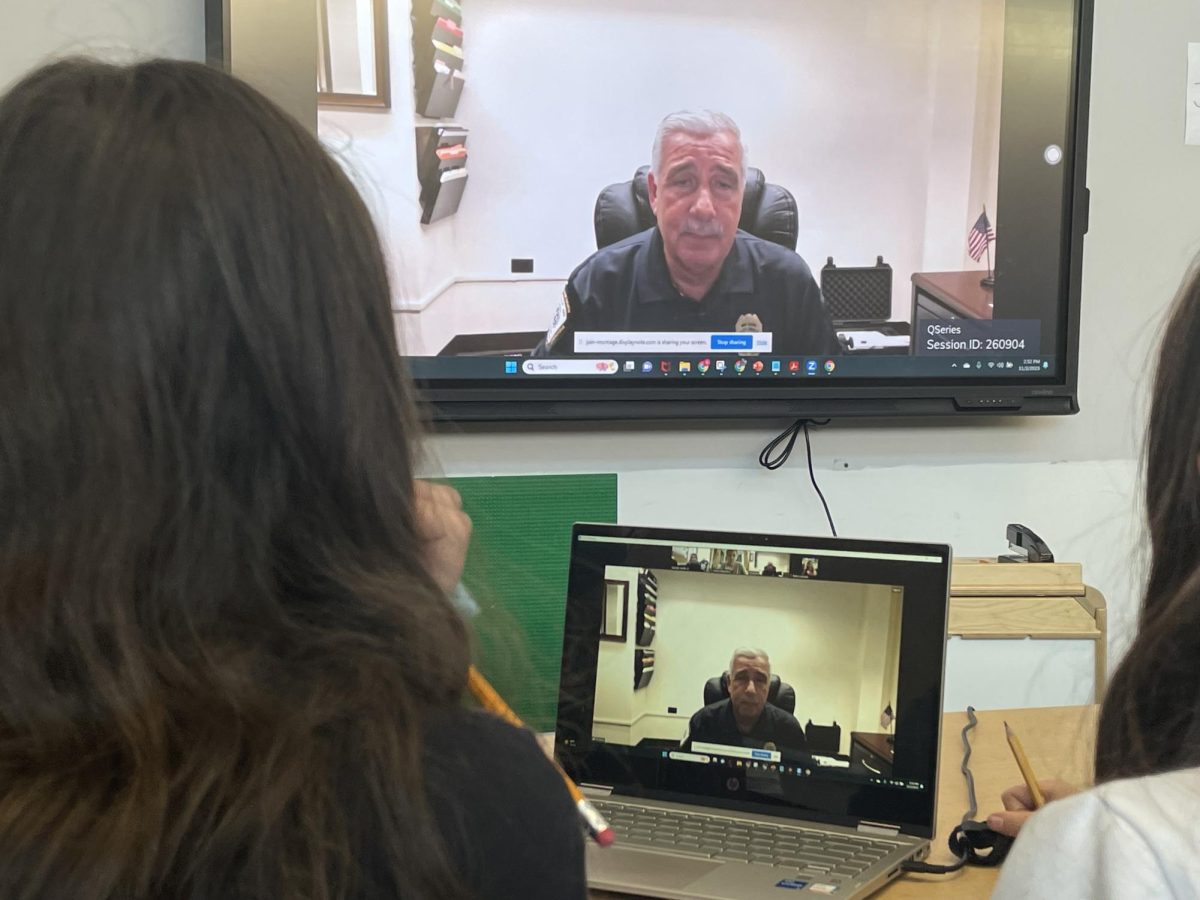
The worry about ICE has spread across the city and the country, said Kica Matos, president of the National Immigration Law Center, who lives in New Haven and spoke via Zoom with East Rock Record reporters.
“This is the context we are all living in now,” said Ms. Matos. “We are seeing ICE officers on our streets,” she said, adding that, “we are calling it kidnapping. They are at the courthouse. They are waiting for immigrants. They are grabbing students.”
Ms. Matos said it is a terrifying time. “People are being targeted by ICE by virtue of how they look,” she said. As a result, said Ms. Matos, “people in New Haven, just like immigrants all over the country, brown people and black people are really afraid of what is happening. Immigrants are terrified to go to work. Immigrant children are terrified to go to school.”
In an interview with East Rock Record reporters, New Haven Mayor Justin Elicker said ICE has become “too aggressive” under the Trump administration. He was upset by ICE’s detainment of Mr. Zabaleta-Ramirez and described him as a student “with a good record, a nice kid, and not a violent person or criminal.”
“The Trump administration makes things up or misrepresents the truth,” said Mayor Elicker. “If people had an interaction with someone they knew and cared about who is an immigrant, they would probably be more open-minded.”
Justin Harmon, director of communications for the New Haven Public Schools, said that following Mr. Zabaleta-Ramirez’s detainment, the community “really locked arms.” Mr. Zabaleta-Ramirez’s teachers wrote letters in support and there were public protests to call attention to the situation, said Mr. Harmon.
New Haven is one of approximately 600 sanctuary jurisdictions in the United States. But what exactly is a sanctuary city and what does it mean in terms of ICE involvement in schools?
According to the American Federation of Teachers (AFT), “schools and educational institutions do not have the legal authority or resources to engage in federal immigration enforcement and thus should not cooperate with federal agencies in their efforts to identify, detain or deport undocumented immigrant students.”
At the same time, John F. Kennedy, a 7th and 8th grade math teacher at East Rock, observed that, “school is the instrument of our government.” He “certainly hopes” that schools would play a part in preventing ICE from detaining students, but these days protections aren’t so clear.
Mr. Kennedy described the United States as a “melting pot” and said the diversity of the country, including immigrants, “is what makes America great.”
However, changes enacted by the Trump administration are threatening that.
Ms. Matos said that Trump’s executive orders changed rules so that “no one would be safe from deportations and something known as ‘sensitive location policies’”— guidelines that restricted enforcement — “would no longer be in place.” In the past, she said, “ICE could not carry out raids at places they considered too sensitive,” including schools and hospitals.
Tetyana Pavelo, a Ukrainian Community Outreach Specialist for Integrated Refugee and Immigrant Services (IRIS), explained that after Trump took office, the group had to make significant changes in how it provides support for refugees and immigrants.
IRIS had to close their Hartford and main New Haven office. The organization’s Education Center at 323 Temple Street in New Haven remains open. Ms. Pavelo said the group’s budget was also cut. And because fewer immigrants are coming into the country now, the organization has adjusted their mission to help families that are already here in Connecticut.
Although IRIS was not involved in the case of Mr. Zabaleta-Ramirez, Ms. Pavelo said other students who receive guidance from IRIS were also in fear and concerned after his detention. “A lot of students were worried,” she said.
Yet Ms. Matos said that people are fighting back for their rights to live in the United States. For instance, her organization is conducting lawyer rights training. She said that it is also extremely important for individuals to understand what is legal — and what is not.
“That is one of the most powerful tools against ICE in immigrant communities. There is a lot of Know-Your-Rights material, and you don’t have to be an English speaker to access the information,” she said.
Ms. Matos is also hopeful about the people who care about this issue in addition to the immigrants who are directly affected by the increased presence of ICE across the country.
The challenge is that knowing your rights also means that teachers and staff should not give up information about students and school leaders should not give ICE agents access to the school. It is the same at people’s homes: they do not have to allow ICE agents to enter. However, if ICE agents have a judicial warrant (a warrant signed by a judge), people must comply.
This is why, said Mayor Elicker, that “it is important that we educate our staff on rights and obligations.” Mr. Harmon said that New Haven teachers and school faculty have been informed that ICE agents are not allowed to enter school property, offices or non-public spaces without a warrant signed by a judge.
This is also why, according to Mayor Elicker, that the general public needs to know their rights. “It is important that you and people you know have resources to go to in case of emergencies,” he said. Mayor Elicker said the city has created a “Know Your Rights” app that helps people know what to do when ICE approaches them.